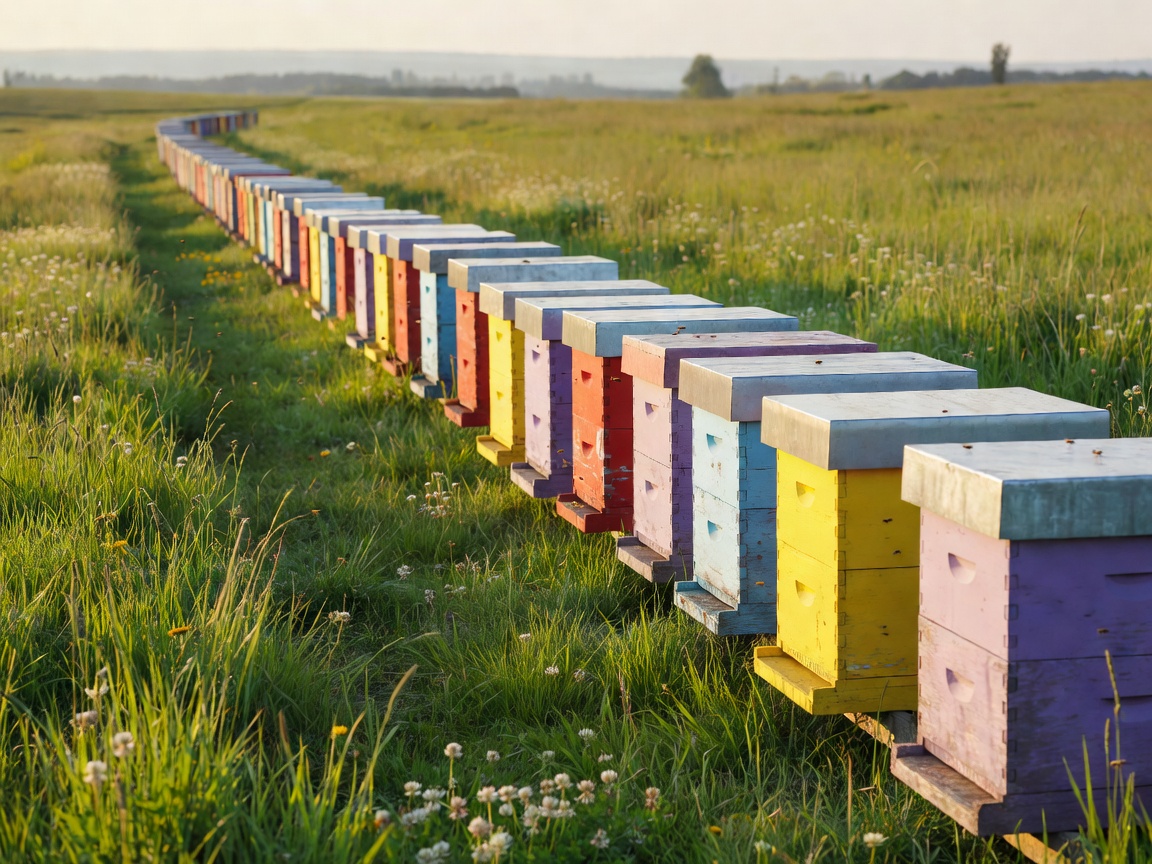
One of the most foundational decisions you will make as a new beekeeper is selecting the type of hive architecture you want to employ. The hive is the habitat you are providing for your colony, and the design dictates how you will interact with the bees, how you will harvest honey, and how the colony manages its space. While there are numerous experimental designs in apiculture, three dominant styles represent the vast majority of modern beekeeping: the Langstroth, the Top-Bar, and the Warré hive.
The Langstroth Hive
Invented in 1852 by Reverend L.L. Langstroth, this modular, vertically expanding hive is the undisputed global standard for both commercial and hobbyist beekeeping. Its design is based on the concept of "bee space"—a precisely measured gap (usually between 1/4 and 3/8 of an inch) that bees will neither fill with wax comb nor seal with propolis.
The Langstroth hive consists of stacked rectangular boxes (supers) that hold removable wooden or plastic frames. The lower boxes (deep supers) form the brood chamber where the queen lays eggs, while upper boxes (medium or shallow supers) are added during nectar flows for honey storage.
| Feature | Langstroth Pros | Langstroth Cons |
|---|---|---|
| Modularity | Easily expanded during nectar flows; standardized parts are available everywhere. | Boxes can be incredibly heavy; a full deep super can weigh up to 80 lbs. |
| Honey Yield | Designed for maximum extraction; frames can be spun and reused. | Focus on yield sometimes compromises natural colony architecture. |
| Community | Most local mentors and clubs teach exclusively on Langstroth equipment. | Aesthetic is highly industrial and utilitarian. |
The Top-Bar Hive (Kenyan Style)
The Top-Bar hive operates on a completely different philosophy. Rather than stacking boxes vertically, the Top-Bar hive is a single, horizontal trough elevated on legs. Instead of four-sided frames, it uses simple wooden bars laid across the top. The bees build natural, free-hanging comb downward from these bars in a catenary curve shape.
This design is frequently favored by backyard hobbyists and those focused on bee conservation rather than maximum honey yield. Because there are no heavy boxes to lift, it is exceptionally accessible for individuals with back issues or physical limitations.
- Ergonomics: The hive is worked at waist height. You only ever lift a single comb at a time (usually weighing 3 to 5 lbs).
- Natural Comb: Bees determine their own cell sizes, which some proponents argue helps naturally manage Varroa mite populations.
- Gentler Inspections: Because you only open a small gap to remove one bar at a time, the colony experiences less temperature disruption and generally remains calmer during inspections.
- Drawbacks: Top-Bar comb is fragile and cannot be placed in a centrifugal extractor. Honey is harvested by cutting the comb entirely, meaning the bees must expend energy rebuilding wax instead of immediately refilling it with nectar. It also requires careful management to prevent swarming in the spring, as horizontal expansion is inherently limited by the length of the trough.
The Warré Hive
Developed in the early 20th century by French monk Émile Warré, this hive is sometimes referred to as the "People's Hive." Warré designed it to mimic a hollow tree trunk, optimizing for the bees' natural thermal preferences and minimal human interference.
Visually, it resembles a small, square Langstroth, but functionally it is quite different. It uses top bars rather than frames, and it is expanded by adding empty boxes to the bottom of the stack rather than the top (nadiring). This forces the colony to build comb downward continuously, keeping the warmest part of the hive undisturbed at the top.
- Thermal Efficiency: The small footprint and thick walls provide excellent insulation, making it very suitable for cold climates.
- Low Interference: The design dictates opening the hive very rarely, relying on external observation for much of the year.
- Drawbacks: Adding boxes to the bottom requires specialized lifting equipment (a hive lift) or the physical strength to lift the entire existing stack. Local legal requirements in some areas mandate removable frames for disease inspection, and standard Warré comb often attaches to the box walls, making extraction difficult without cutting.
Conclusion: Making Your Choice
For the vast majority of beginners, the Langstroth hive remains the most practical choice simply because of the immense support network available. When you run into a problem, every mentor, book, and forum will be able to speak the language of Langstroth equipment.
However, if your primary goal is pollination and casual observation, and you have no intention of managing heavy boxes, the Top-Bar hive offers a beautiful, ergonomic alternative. Whatever you choose, commit to understanding its specific management rhythm, as trying to apply Langstroth techniques to a Top-Bar hive (or vice versa) will only lead to frustration for both you and your bees.